
AI has officially crossed the threshold from “interesting experiment” to “strategic priority.”But 2025 comes with a twist that reshapes everything we know about enterprise AI. McKinsey’s latest report shows enterprises shifting from AI pilots to agentic workflows and rethinking innovation and workforce strategy.
2025 is the year AI Agents go mainstream.
According to McKinsey’s 2025 Global Survey:
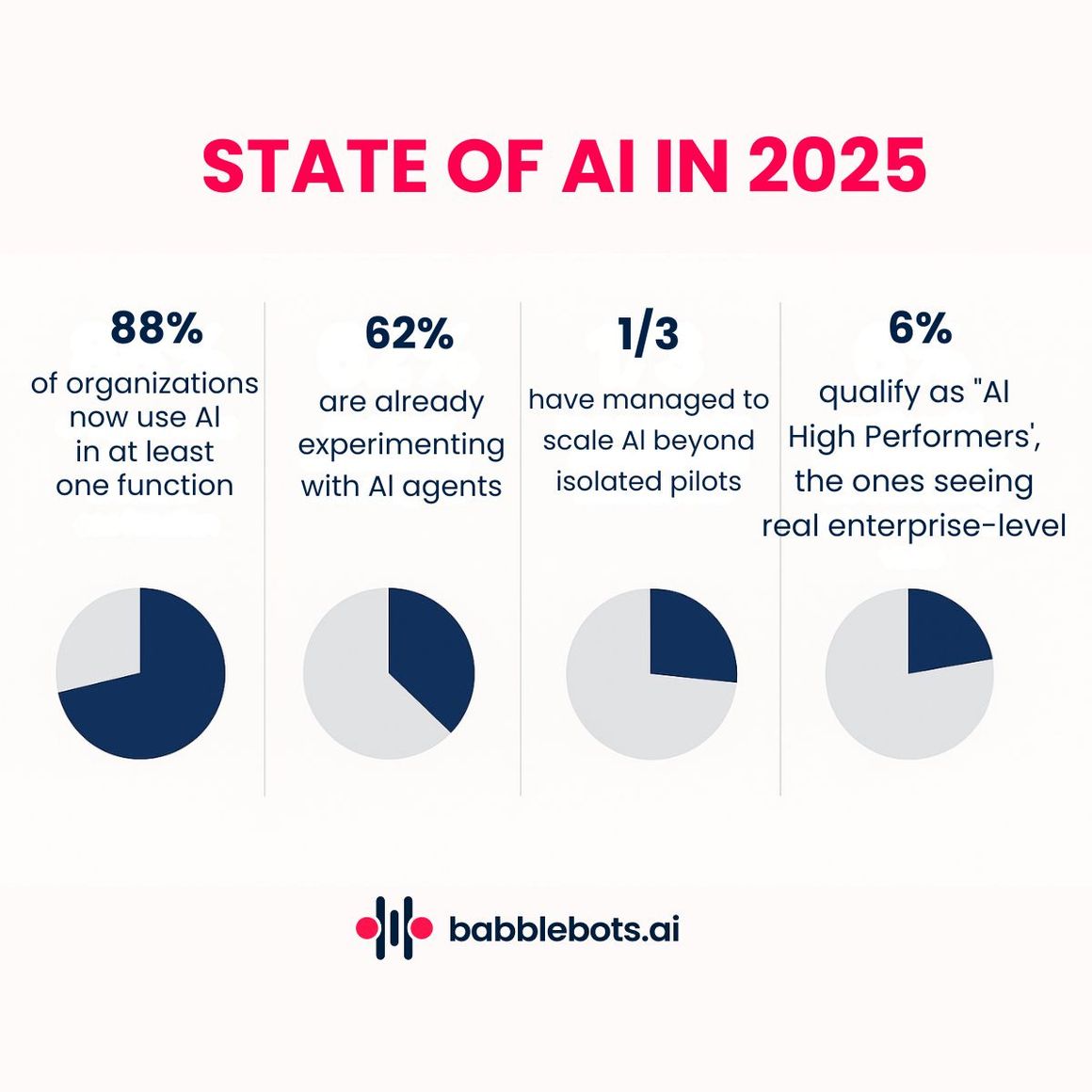
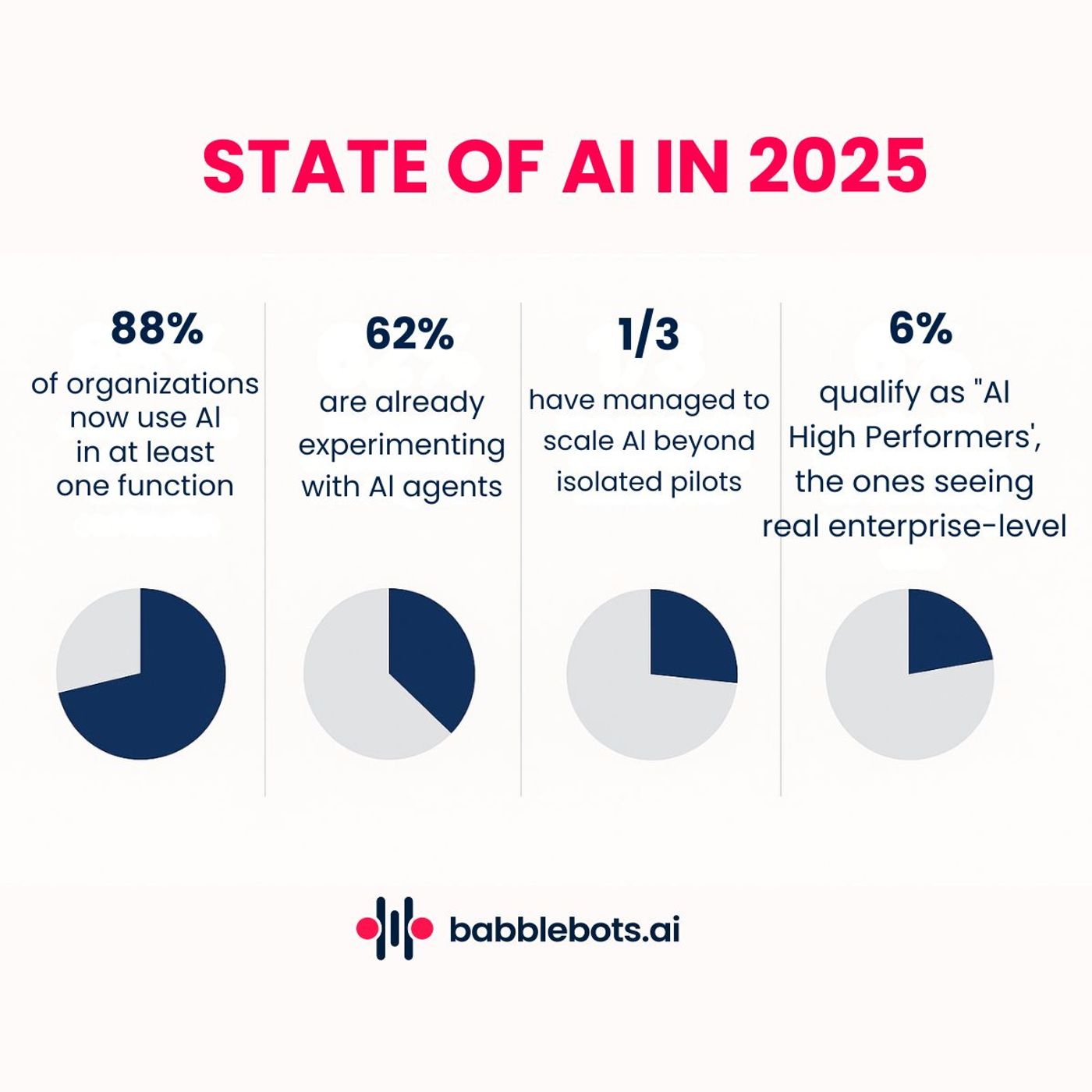
- 88% of organizations now use AI in at least one function
- 62% are already experimenting with AI agents
- But only 1/3 have managed to scale AI beyond isolated pilots
- And just 6% qualify as “AI High Performers”, the ones seeing real enterprise-level value
The report paints a reality that many leaders feel intuitively:AI has spread, but impact hasn’t caught up, yet.And the gap comes down to one central insight:
AI doesn’t transform companies. Agentic workflows do.
Why AI Agents Are the Breakout Story of 2026
McKinsey’s report shows a dramatic shift: AI adoption is high, but Agentic AI is where momentum is exploding.
Key stats:
- 23% of organizations are already scaling autonomous AI agents (not just piloting)
- 39% are running early experiments
- Agents are gaining the fastest adoption in IT, knowledge management, and customer operations
- Tech, TMT, and healthcare report the highest agent uptake
And why now?Because AI has moved from generating outputs to executing decisions.
If 2023 was the year of “chatbots,”2024 was the year of “co-pilots,”2025 is the year of autonomous AI agents running multi-step, agentic workflows across the enterprise.
This aligns perfectly with the thesis supporting Gen AI bringing disruption:The next trillion-dollar unlock in enterprise AI is autonomous workflow execution.
While most companies still use AI as a fancy autocomplete, the leaders, the “high performers”, are redesigning processes around agentic systems.
AI Adoption vs Impact: Why Most Enterprises Still Struggle to Scale AI Agents
One of the most important insights from the report:
Companies have adopted AI widely but they rarely scale it.
- 88% of organizations use AI in at least one function
- Only 33% have scaled AI across the enterprise
- Most teams stay “stuck” in POCs and pilots
This scaling gap blocks most of the industry today.Companies are testing AI like apps, not deploying it like infrastructure.
The companies that are winning (the “top 6%” high performers) do one thing differently:
They redesign workflows end-to-end and let AI take over execution.
They’re not adding an AI tool to a broken process.They’re designing a new process around AI agents.
Innovation, Not Efficiency, Separates Winners from Losers
The report makes this very clear:
80% of companies set efficiency as the goal.
High performers set growth, innovation, and transformation as the goal.
Efficiency → incremental gains.Innovation → exponential gains.
High performers:
- Deploy AI in more business functions
- Scale faster
- Rewire workflows intentionally
- Invest more capital (20%+ of digital budgets)
- Expect transformative business change, not cost cuts
This is the mindset shift Babblebots pushes:Hiring automation isn’t about “saving recruiter time.”It’s about “building a fundamentally stronger, faster, bias-free hiring engine.”
The future goes to companies that use AI not to do the same things cheaper,but to do new things that were impossible before.
Where Companies Actually See Value from AI Agents in 2026
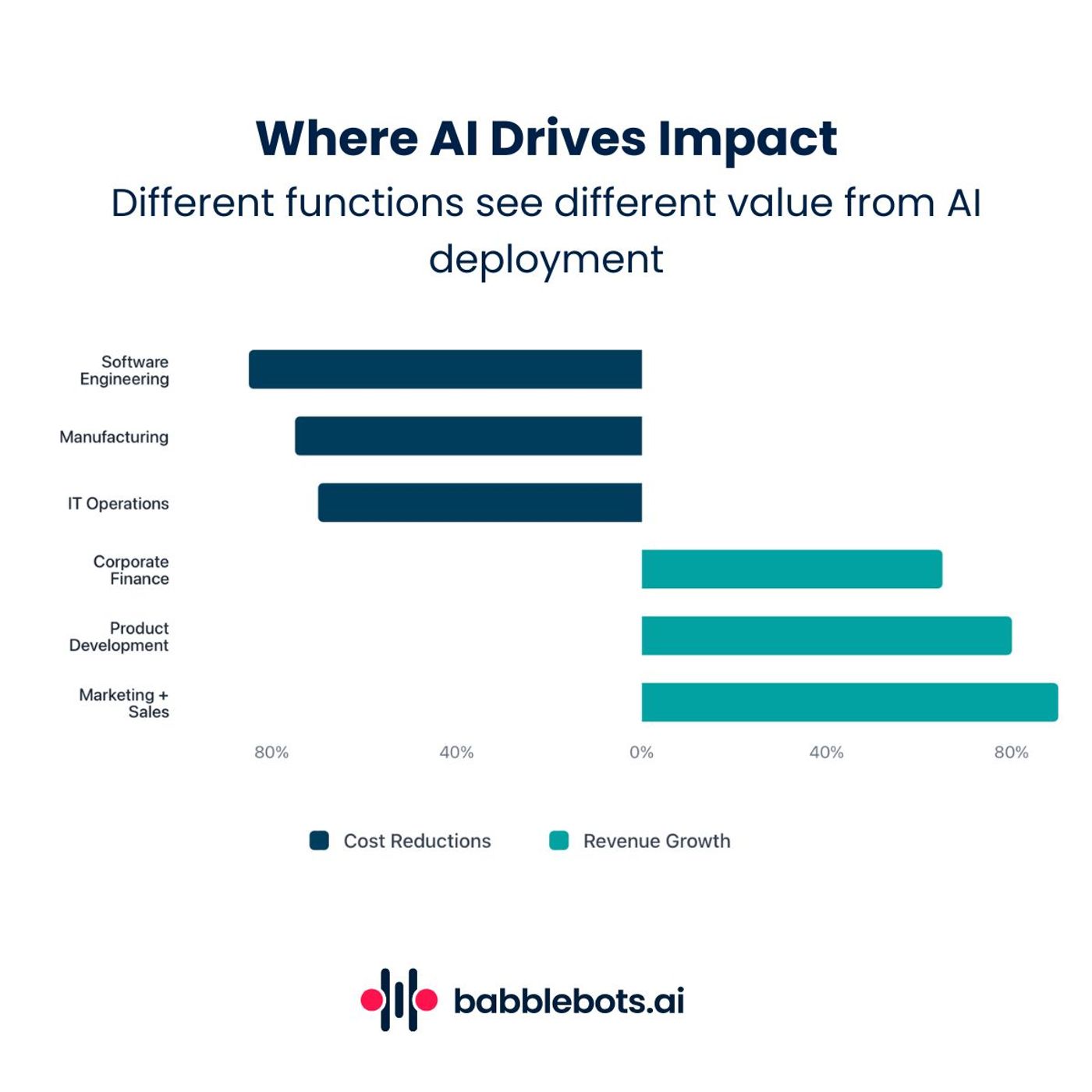
Even though enterprise-level impact is limited, the report reveals strong gains at the use-case level:
Cost reductions
Seen most in:
- Software engineering
- Manufacturing
- IT operations
Revenue growth
Strongest in:
- Marketing + sales
- Corporate finance
- Product development
Innovation boost
64% say AI has directly improved innovation.
ROI compounds not because the agent moves faster, but because humans operate at a higher altitude.
What This Means for the Future of AI
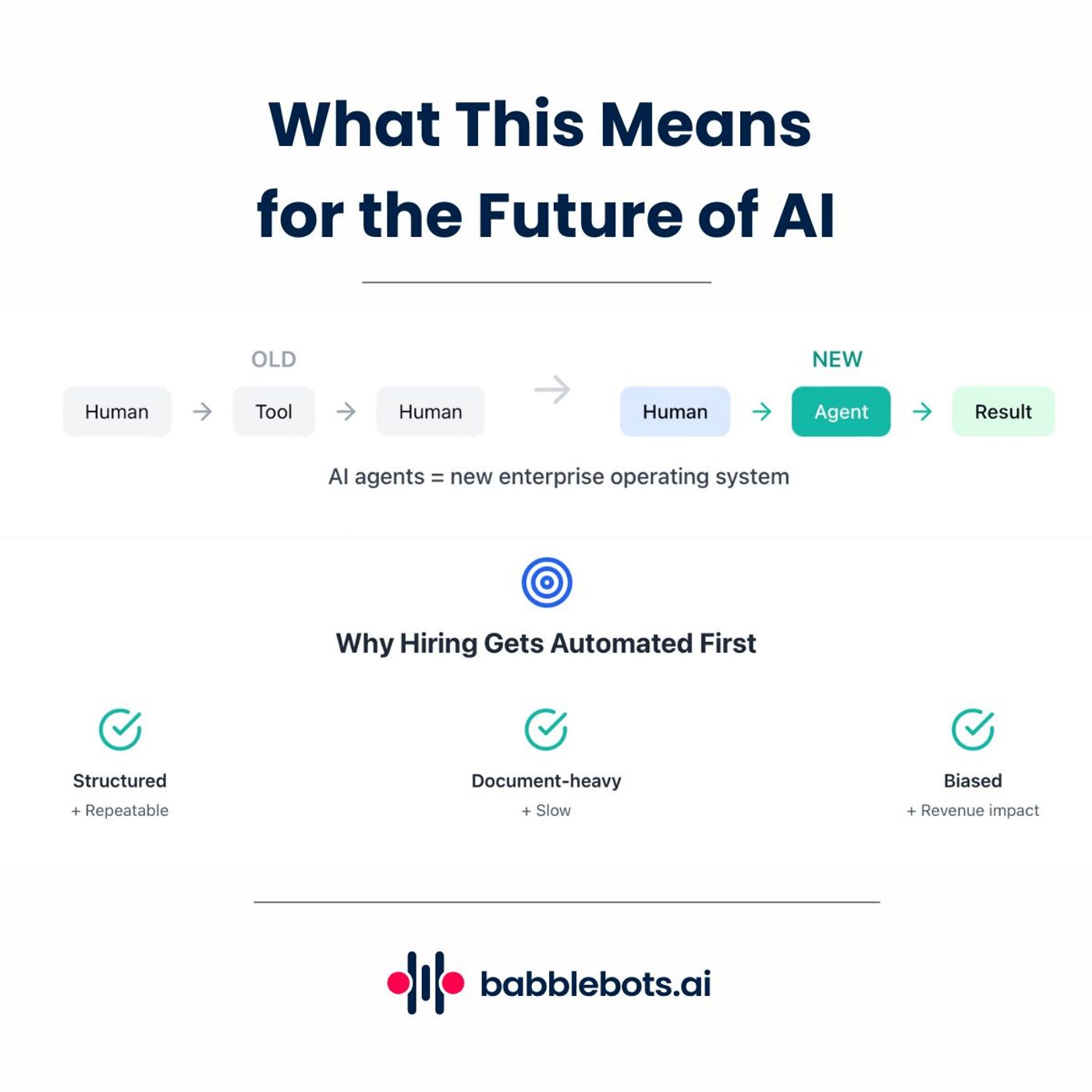
1. AI agents now power the new enterprise operating system.
Enterprises are shifting workflows from:
human → tool → human
to
human → agent → result
2. The scaling gap will define winners and losers.
The companies that can't operationalize AI will fall behind, fast.
3. The next decade belongs to “AI High Performers.”
The 6% today → 20% in 2027 → 40% in 2030.
4. AI agents will make hiring the first major workflow to be fully automated.
Because:
- It’s structured
- It’s repeatable
- It’s document-heavy
- It’s slow and expensive
- It’s filled with bias
- It directly impacts revenue
5. Agentic AI will outperform co-pilots.
Co-pilots help.Agents execute.Enterprises need execution.
And that’s where Babblebots AI leads, building fully autonomous agents that run end-to-end hiring cycles, not just “assist” with them.